Product update · May 2026
Transfers, promise-to-pay pauses, and voicemail — handled
Here is what we shipped in May. Four changes your collections team will feel first — plus everything else, listed at the end.

Vitālijs Silins-Ozerson LinkedIn
CTO & co-founder · 31 May 2026
major
Hand a live call to a human agent
Your AI voice agent can transfer a live call to a real person or number. Add a transfer as a step in the call script, point it at a number, and the call bridges to your team cleanly.
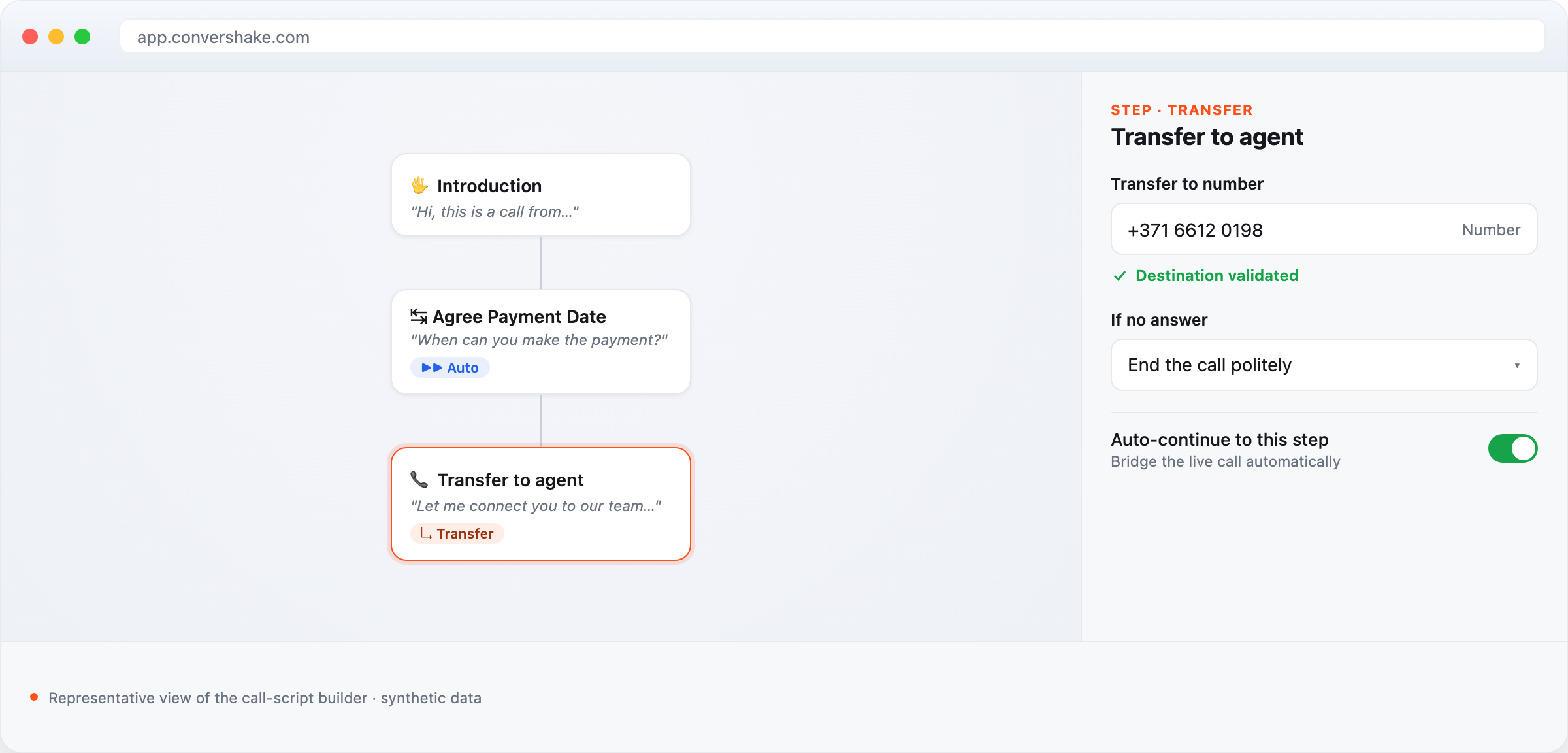
Some calls are better in a person's hands — a dispute, a hardship, or a question that sits outside the script.
- Add a transfer step in the call-script builder and point it at any destination number.
- The destination is validated before the call ever dials, so a bad number fails safely instead of mid-call.
- The transfer connects as a real bridged call, all the way through to the phone network.
- Transfer timeouts and no-answer are handled, so a call that can't connect doesn't hang.
What shipped
- Live transfer to a number, connected end to end
- Transfer step in the call-script builder (auto-continue target)
- Destination validated before the call dials
- Transfer timeouts and no-answer handled
major
Stop calling once a borrower promises to pay
When a borrower commits to a payment date on the call, the agent captures it and pauses further calls to that contact until then — no more dialing someone who's already promised. You can review, override, or cancel any pause from a new Operations tab.
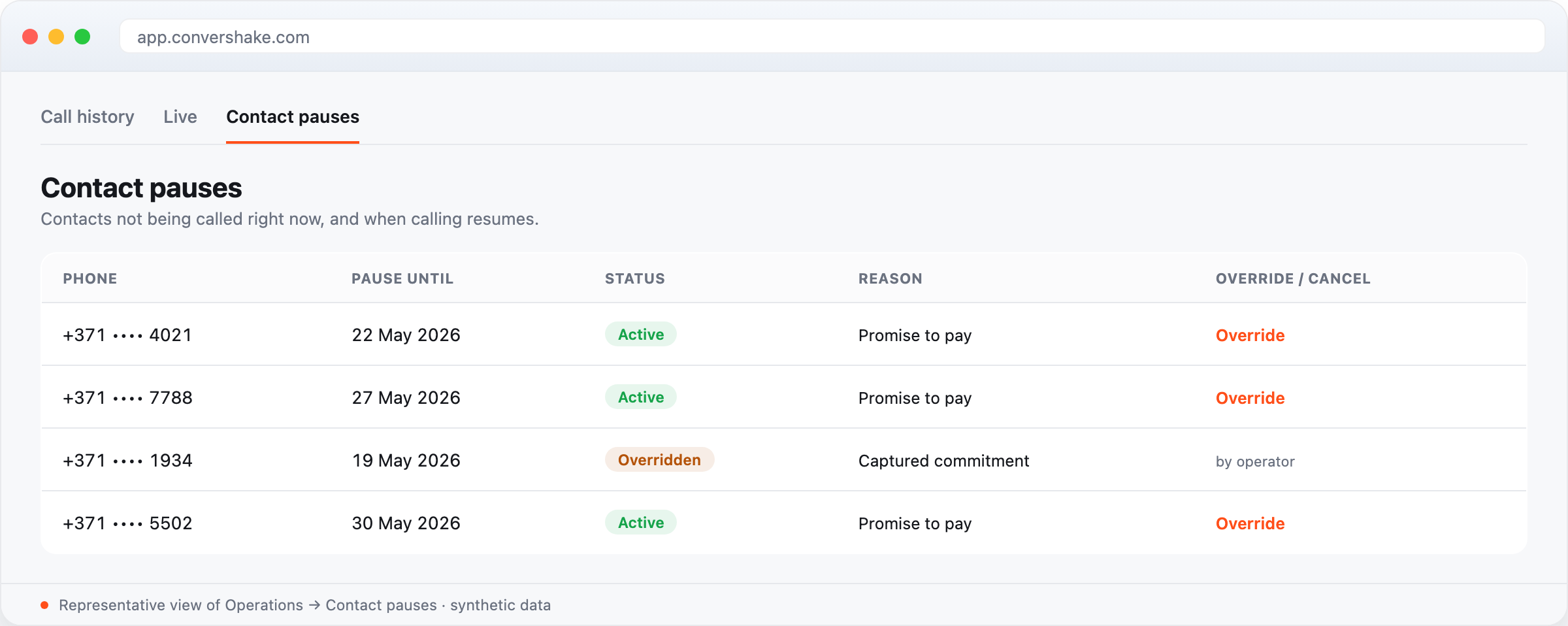
When a borrower commits to a payment date, calling them again the next day only frustrates someone who's already going to pay — and it's a compliance risk.
- A promise-to-pay captured live on the call becomes a "don't call this contact until" date.
- A new Contact pauses tab in Operations lists every pause, when it lifts, and why.
- Override or cancel any pause — with a recorded reason — when you need to reach the contact sooner.
- Captured pauses and suppressed attempts are pushed to your systems as webhooks.
What shipped
- Promise-to-pay captured live → "don't call until" date
- New Contact pauses tab in Operations
- Override or cancel a pause, with a recorded reason
- Captured pauses and suppressed attempts as webhooks
major
Voicemail, handled on every campaign
Every outbound campaign now detects when it reaches a voicemail and responds correctly — it leaves your authored message in the borrower's language, or dispositions the call so you're not chasing a dial that was never a person. On by default, including flows you already run.
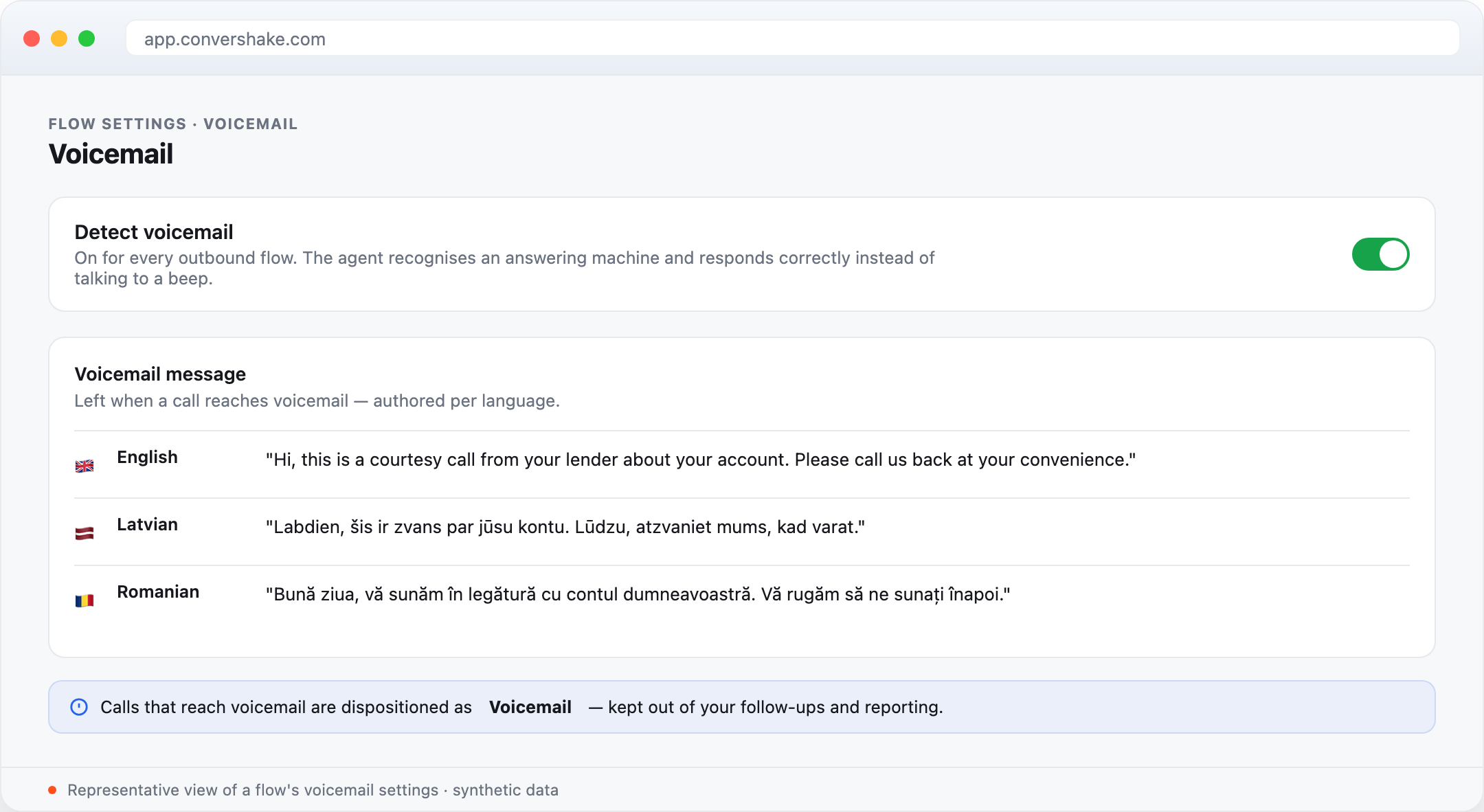
When a dial reaches a voicemail, it should be handled as one — the right message left, and the call recorded as a voicemail so your follow-ups and reporting stay clean.
- Voicemail detection is on by default for every outbound flow — no setup, and backfilled to existing flows.
- When voicemail is reached, the agent leaves your authored message in the right language.
- Voicemail calls are dispositioned as voicemail, so your follow-ups and reporting stay clean.
- Detection is non-invasive — it never interrupts a real person who picks up.
What shipped
- Voicemail detection on by default (all outbound flows)
- Leaves your authored message, per language
- Voicemail dispositions so follow-ups skip them
- Non-invasive detection — never interrupts a live person
meaningful
New API for calls, contacts, and events
New public API endpoints let your systems read calls and add contacts to a campaign programmatically, and new webhooks push key moments to you as they happen — so you can build Convershake into your collection workflow instead of exporting after the fact.
Collections teams want call data and contacts moving through their own systems, with a live signal the moment something important happens on a call.
- Read your calls over the API — the full list or a single call.
- Add contacts to a campaign programmatically.
- Get webhooks when a call reaches a terminal state, an attempt is suppressed, or a promise-to-pay pause is captured.
What shipped
- GET calls — list and single call
- Add contacts to a campaign via API
- Webhooks: session terminal, attempt suppressed, contact-pause captured
Everything else that shipped
Campaigns

Building call scripts
Calls and reporting

Languages
See it on your own flows
These shipped for every workspace with outbound campaigns.